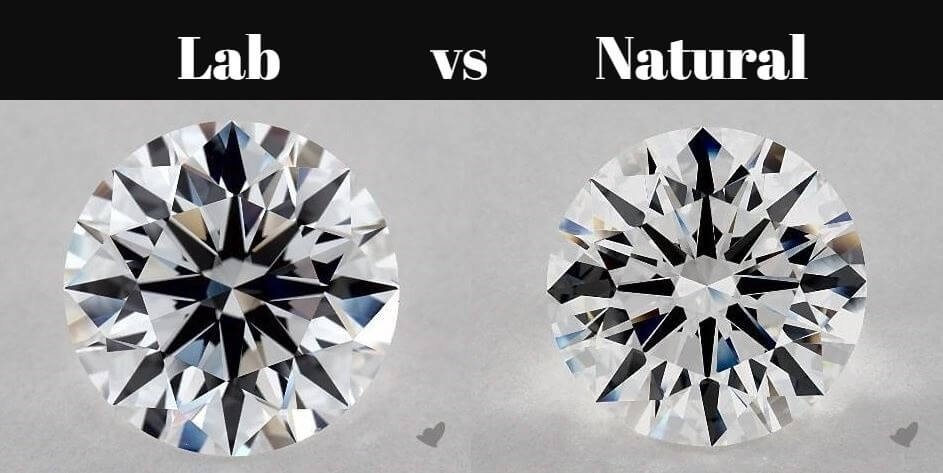
Choosing a diamond today isn't as simple as it once was. You're not just picking a cut or a carat; you're deciding between two fundamentally different origins: one forged in the Earth's fiery depths over billions of years, the other meticulously crafted in a lab in mere weeks. Both offer stunning brilliance, but their paths to your finger—and their long-term value—diverge dramatically. Understanding these distinctions is crucial, whether you're searching for an engagement ring, a special gift, or a personal indulgence.
This guide cuts through the marketing hype to give you the unvarnished truth about lab-grown versus natural diamonds, empowering you to make a choice that truly reflects your priorities and values.
At a Glance: Key Differences
- Origin: Natural diamonds are geological wonders formed deep within the Earth; lab-grown diamonds (LGDs) are human-made.
- Composition: Both are chemically real diamonds (carbon-based), but natural diamonds often contain trace nitrogen, while LGDs generally do not.
- Rarity & Supply: Natural diamonds are finite and rare; LGDs can be produced in unlimited quantities.
- Price: LGDs are significantly cheaper than natural diamonds and their prices are rapidly falling.
- Value Retention: Natural diamonds generally retain around 50% of their initial value; LGDs have minimal resale value and depreciate drastically.
- Uniqueness: Each natural diamond is unique, with its own history; LGDs are mass-produced to specifications.
- Symbolism: Natural diamonds carry ancient symbolism of strength, rarity, and enduring love; LGDs offer a modern, cost-effective alternative.
- Identification: While visually identical to the untrained eye, experts can distinguish them with specialized equipment and certification.
Unpacking the Sparkle: What Are We Truly Comparing?
Before we dive into the nuances, let's establish a clear understanding of what a diamond actually is, and how these two categories fit in.
The Earth's Timeless Treasures: Natural Diamonds
Imagine a journey back in time, billions of years ago, deep within the Earth's mantle. Under immense pressure and temperatures exceeding 2,000 degrees Fahrenheit, carbon atoms began to crystallize. This extraordinary process, occurring between one and three billion years ago (with the oldest known diamonds dating back 3.7 billion years!), created the hardest natural mineral known to humankind: the natural diamond.
These geological marvels are brought to the surface through rare, violent volcanic eruptions, often embedded in ancient kimberlite pipes. Each natural diamond is a testament to the Earth's power and a finite resource, making every stone inherently rare and unique. They are primarily carbon, though they often contain minute traces of nitrogen, a signature of their natural formation. This deep history and singular origin contribute significantly to their mystique and value, as explored in Everything about Adamas Adamas.
Crafted Brilliance: Lab-Grown Diamonds
In stark contrast, lab-grown diamonds, also known as synthetic, cultivated, or man-made diamonds, are born not in the Earth, but in highly controlled laboratory environments. These are not "fake" diamonds; the U.S. Federal Trade Commission (FTC) classifies them as "real" diamonds because they share the exact same carbon-based chemical composition, atomic structure, and optical properties as their natural counterparts.
Modern technology has allowed scientists to simulate the extreme conditions that create natural diamonds, compressing the process from billions of years to a mere matter of weeks. The two primary methods are:
- High Pressure High Temperature (HPHT): Carbon material is subjected to extreme heat (up to 2,700°F) and pressure (1.5 million pounds per square inch), mimicking the conditions deep within the Earth.
- Chemical Vapor Deposition (CVD): A seed crystal is placed in a vacuum chamber, and carbon-rich gases are introduced. When heated, these gases break down, and carbon atoms attach to the seed, layer by layer, growing a diamond.
The key difference? While chemically identical, LGDs can be produced in limitless quantities, a factor that profoundly impacts their market value and uniqueness.
Distinguishing Real Diamonds from Their Impostors: Simulants
It's crucial not to confuse lab-grown diamonds with diamond simulants. Simulants look like diamonds but are not chemically identical and do not share the same properties. They are merely imitations. Common diamond simulants include:
- Cubic Zirconia (CZ): A low-cost, widely available simulant, but noticeably less hard and brilliant than a diamond.
- Moissanite: A silicon carbide mineral that has a different refractive index, often exhibiting more fire (rainbow flashes) than a diamond, and is slightly less hard.
Here's a quick comparison of their properties:
| Gemstone Type | Chemical Basis | Hardness (Mohs Scale) | Refractive Index |
| :------------------ | :---------------- | :-------------------- | :--------------- |
| Natural Diamond | Carbon | 10 | 2.42 |
| Lab-Grown Diamond | Carbon | 10 | 2.42 |
| Moissanite | Silicon Carbide | 9-9.5 | 2.65-2.69 |
| Cubic Zirconia | Zirconium Dioxide | 8 | 2.20 |
While LGDs are "real" diamonds, simulants are fundamentally different materials. They lack the inherent durability and sparkle of genuine diamonds, whether natural or lab-grown.
Seeing the Difference: Identification and Certification
To the naked eye, a high-quality lab-grown diamond and a natural diamond of similar specifications are indistinguishable. Both possess the same fiery brilliance and sparkle. Even trained jewelers often can't tell them apart without specialized equipment.
However, gemological laboratories use advanced tools to identify subtle differences:
- Growth Patterns: LGDs often exhibit distinct growth patterns (e.g., cubic or octahedral structures in HPHT, or striations in CVD) that are different from natural diamonds.
- Trace Elements: As mentioned, natural diamonds often contain trace nitrogen, while many LGDs do not. Specific spectroscopic tests can detect these differences.
- Inclusions: While both can have inclusions, their characteristics (e.g., metallic inclusions in HPHT, or dark pinpoint inclusions in CVD) can differ.
The most reliable way to know what you're buying is through certification. Reputable grading labs like GIA, IGI, and GCAL issue certificates that clearly state whether a diamond is "natural" or "lab-grown." Always insist on a certified diamond, regardless of its origin, to guarantee its identity and quality.
The Price of Brilliance: Value, Scarcity, and Investment Potential
This is where the paths of lab-grown and natural diamonds diverge most sharply, particularly concerning long-term value and investment.
The Enduring Value of Natural Diamonds
Natural diamonds derive their value from their inherent scarcity and the immense time and unique conditions required for their formation. They are finite resources, and their supply is limited. This rarity has underpinned their value for centuries.
Historically, natural diamond prices have shown remarkable stability and even appreciation. Over the last 35-50 years, the average price of natural diamonds has risen approximately 2-3% per year. While not a liquid asset in the way gold or stocks are, natural diamonds often retain around 50% of their initial retail value upon resale, and for exceptional stones, sometimes even more. This makes them a tangible asset that can be passed down through generations, serving as a valuable heirloom. Their intrinsic value is tied to their geological history and limited supply, creating a sense of enduring worth.
The Rapidly Shifting Sands of Lab-Grown Diamond Prices
The story is very different for lab-grown diamonds. Because they can be produced in potentially unlimited quantities, their prices are not dictated by rarity but by production cost and market competition.
We've seen a dramatic shift in LGD pricing over a short period:
- 2016: Lab-grown diamonds were priced at around 80% of equivalent natural diamonds.
- 2024: Prices have plummeted to less than 20% of natural diamonds, and in some cases, they are 80% cheaper than their natural counterparts.
This sharp decline is expected to continue until LGD production reaches a stable, commoditized price point. While this makes LGDs an incredibly attractive option for budget-conscious buyers seeking maximum visual impact, it severely impacts their resale value. It is almost impossible to resell a lab-grown diamond for anything close to its initial purchase price. Buyers should anticipate a significant, immediate loss in value after purchasing an LGD, treating it more like a consumer good than an investment.
Resale Realities: A Crucial Consideration
For many, a diamond purchase is a significant investment. If you ever consider selling your diamond:
- Natural Diamonds: While you won't recoup 100% of your retail price, natural diamonds tend to retain about 50% of their initial value, sometimes more for high-quality, sought-after stones. Their rarity and historical appreciation contribute to this.
- Lab-Grown Diamonds: The resale market for LGDs is virtually non-existent or offers only a tiny fraction of the original purchase price. As production costs continue to fall and supply increases, the "used" LGD market struggles to find buyers willing to pay anything significant for a mass-produced item that loses value so quickly.
If value retention or potential as a future heirloom is a priority, natural diamonds stand as the clear choice. If your primary concern is getting the largest, most brilliant stone for the lowest upfront cost, and resale value is not a factor, an LGD might be appealing.
Beyond the Brilliance: Uniqueness and Symbolism
A diamond is more than just a sparkling stone; for many, it carries deep personal and symbolic meaning.
The Unique Story of Natural Diamonds
Every natural diamond is truly one-of-a-kind. No two are exactly alike, each possessing a unique fingerprint of inclusions and characteristics that tell a story spanning billions of years. When you hold a natural diamond, you're holding a piece of Earth's ancient history, a rare miracle of geology.
The word "diamond" itself comes from the Greek "adamas," meaning "unbreakable" or "unconquerable." For nearly 4,000 years, diamonds have symbolized strength, resilience, power, and enduring love. The first documented diamond engagement ring was given in 1477, solidifying its place as a powerful emblem of commitment and eternal affection. This profound symbolism, rooted in millennia of history and geological rarity, adds an intangible yet powerful layer of value to natural diamonds. They aren't just minerals; they're tiny capsules of time and emotion, a legacy to be passed down.
The Mass-Produced Appeal of Lab-Grown Diamonds
Lab-grown diamonds, while beautiful and chemically identical, lack this millennia-old narrative and inherent uniqueness. They are produced in mass quantities to precise specifications, meaning there's no inherent "story" or unique geological history embedded within each stone. They offer a modern interpretation of luxury, prioritizing accessibility and affordability over the romantic narrative of rarity and ancient origin. While they can still carry sentimental value through personal association, they don't possess the same deep symbolic resonance derived from their unique formation and limited supply.
The Earth's Footprint: Environmental and Ethical Considerations
The environmental and ethical impact of diamonds is a complex topic, often simplified or misrepresented by marketing. Both natural and lab-grown diamonds have an environmental footprint, and understanding these nuances is essential for an informed choice.
The Natural Diamond Industry: Evolution and Conservation
The natural diamond industry has faced scrutiny regarding its environmental and social impact. However, significant advancements have been made. Modern, responsible diamond mining operations adhere to strict environmental regulations and engage in extensive conservation efforts.
Consider this: the environmental impact of a single carat of natural diamond, from mine to finger, is roughly comparable to the impact of manufacturing three smartphones. Furthermore:
- The industry actively researches how kimberlite rock (where diamonds are found) can absorb carbon dioxide.
- For every acre used for mining, the industry collectively sets aside three acres for environmental conservation.
- Modern diamond recovery processes do not use toxic chemical byproducts; diamonds are extracted through mechanical means.
Reputable natural diamond companies are committed to sustainable practices and contribute significantly to the economic and social well-being of the communities where they operate, funding schools, hospitals, and infrastructure.
Lab-Grown Diamonds: A Closer Look at "Eco-Friendly" Claims
Lab-grown diamonds are often marketed as a "sustainable" or "eco-friendly" alternative. While they don't involve traditional mining, their production is far from carbon-neutral or impact-free.
The process of creating LGDs is incredibly energy-intensive:
- HPHT requires extreme temperatures (up to 2,700°F) and pressures (1.5 million pounds per square inch).
- CVD also demands high temperatures and controlled environments.
These processes consume substantial amounts of electricity and often require significant quantities of water for cooling. A major concern is the energy source: approximately 60% of LGDs are produced in China and India, countries heavily reliant on coal for electricity generation. Even if a specific facility claims to use hydropower, the overall energy grid in these regions often remains heavily fossil fuel-dependent.
Therefore, despite the "eco-friendly" marketing, the environmental footprint of many LGDs can be significant, powered by the very fossil fuels they aim to circumvent. There is currently no broad consensus among environmental experts that LGDs are unequivocally the more sustainable choice, as their "green" credentials depend heavily on the specific energy mix of their production facility.
Making Your Choice: A Personal Decision
Ultimately, the choice between a lab-grown diamond and a natural diamond is a deeply personal one, driven by your individual priorities, values, and budget. There's no single "right" answer, only the best fit for you.
Consider these factors as you weigh your options:
- Appearance vs. Value:
- If your primary goal is to maximize visual impact (size, sparkle) for the lowest upfront cost, and you're not concerned about resale value, an LGD offers identical beauty at a significantly lower price point. Just be aware that its value will likely depreciate quickly and substantially.
- If you value a stone that retains its value over time, holds potential as an heirloom, and embodies scarcity, the natural diamond is the superior choice.
- Uniqueness and Symbolism:
- If you seek a stone with a unique geological history, a connection to billions of years of Earth's formation, and rich ancient symbolism of enduring love and rarity, a natural diamond will resonate more deeply.
- If you appreciate modern innovation and are satisfied with a chemically identical stone without the historical narrative, an LGD is a viable option.
- Ethical and Environmental Footprint:
- Do your research on both industries. Look for certifications and transparency. For natural diamonds, seek out conflict-free certifications like the Kimberley Process. For LGDs, inquire about the energy sources used in their production. Don't simply accept blanket "eco-friendly" claims without investigation.
- Durability:
- Both natural and lab-grown diamonds are equally hard and durable (a perfect 10 on the Mohs scale). If properly cared for, either will last forever.
Your Next Step: Informed Diamond Shopping
Whether you lean towards a natural or lab-grown diamond, arming yourself with knowledge is your best asset.
- Prioritize Certification: Always purchase a diamond with a reputable certification (GIA, IGI, GCAL) that clearly states its origin (natural or lab-grown) and grading parameters (the 4Cs: carat, cut, color, clarity). This ensures transparency and verifies the stone's authenticity.
- Understand Pricing: For natural diamonds, expect prices to reflect their rarity and quality. For lab-grown diamonds, be aware of the rapid depreciation and factor that into your budget and expectations.
- Consider Your 'Why': Why are you buying this diamond? What does it symbolize for you? The answers to these questions will guide you to the "path to value" that is most meaningful.
In the end, both lab-grown and natural diamonds offer breathtaking beauty. Your choice comes down to whether you prioritize the finite wonder of natural rarity and long-term value, or the accessible brilliance of human innovation. Either way, an informed decision ensures your diamond will be cherished for years to come.