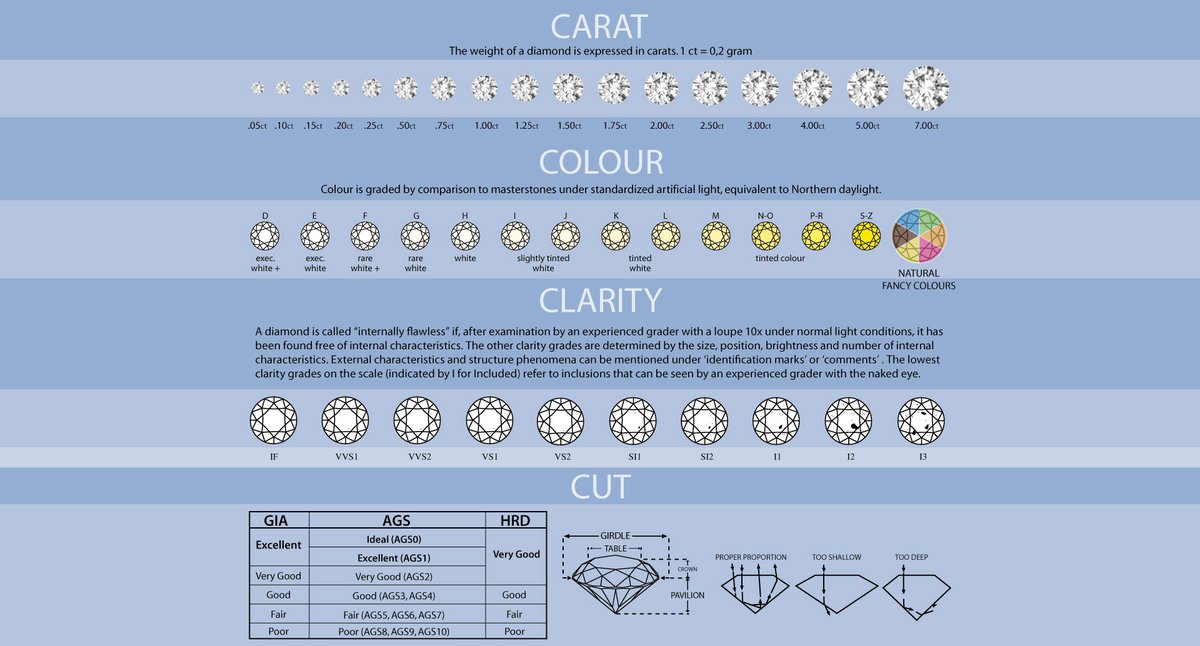
Imagine holding a tiny universe in your hand, glittering with captured light and whispering tales of unimaginable pressure and time. That's the magic of a diamond. But how do you truly understand what makes one diamond sparkle with breathtaking intensity while another falls flat? The secret lies in deciphering Diamond Quality & The 4Cs – a universal language established by the Gemological Institute of America (GIA) that helps you measure a stone's inherent beauty and value. More than just a technical grading system, the 4Cs offer a roadmap to finding a diamond that resonates with your heart and your budget.
This guide will demystify Cut, Color, Clarity, and Carat, transforming you from an overwhelmed shopper into a discerning expert. We’ll explore not just what each "C" means, but how they interact, guiding you toward a choice that truly reflects brilliance.
At a Glance: Your Diamond Quality Cheat Sheet
- The 4Cs (Cut, Color, Clarity, Carat) are the global standard for evaluating diamond quality and value.
- Cut is King: It's the most crucial factor for a diamond's sparkle, brilliance, and overall beauty. Prioritize it!
- Color Scale: Ranges from D (colorless) to Z (light yellow/brown). Aim for H-J for great value and a near-colorless look.
- Clarity Scale: Measures imperfections. Target VS2-SI1 for "eye-clean" diamonds without overpaying.
- Carat Weight: This is about weight, not size. Don't chase a number; prioritize a beautiful stone.
- Always Certify: Insist on a grading report from a reputable lab like GIA, IGI, or HRD.
- Balance is Key: The best diamond for you perfectly balances these characteristics within your preferences and budget.
The Genesis of Brilliance: Understanding the 4Cs
Before the 1940s, there was no consistent way to describe a diamond’s quality. Dealers used vague terms, and buyers had little objective information. Enter the Gemological Institute of America (GIA), which revolutionized the industry by establishing the now-iconic 4Cs. This framework—Cut, Color, Clarity, and Carat—provided a standardized, universal language, empowering both jewelers and consumers to assess and compare diamonds fairly. These factors aren't isolated; they’re a symphony, each playing a critical role in the diamond’s overall performance and aesthetic appeal. Understanding their interplay is paramount to making an informed decision about one of life's most significant purchases.
Cut: The Masterpiece of Sparkle
If a diamond is the stage, its cut is the dancer, dictating every move, every flash of light, and every moment of breathtaking performance. Among the 4Cs, Cut is unequivocally the most important factor influencing a diamond's brilliance, fire, and scintillation – the very qualities that make us fall in love with these stones. It’s not about the diamond's shape (like round or princess), but how well its facets interact with light.
A masterfully cut diamond acts like a tiny, perfectly calibrated mirror. When light enters the diamond, an ideal cut allows it to travel deep into the stone, reflect off the internal facets, and return to your eye as a dazzling display of white light (brilliance), rainbow flashes (fire), and sparkling patterns (scintillation) as the diamond moves. A poor cut, conversely, allows light to leak out through the bottom or sides, resulting in a dull, lifeless appearance, regardless of the diamond's color or clarity.
The GIA grades cut quality on a scale from Excellent to Poor for standard round brilliant diamonds. Other labs like IGI may use terms like Ideal. While an "Excellent" grade from the GIA is a strong indicator of quality, it doesn't automatically guarantee the absolute best light performance. Why? Because the "Excellent" category is broad, encompassing a range of proportions that still perform very well. For true enthusiasts, diving into specific facet angles and proportions can reveal subtle differences even within the top grade. A truly outstanding cut will maximize the diamond’s visual impact, making it appear livelier and often larger than its actual carat weight suggests. This is where prioritizing cut above all else truly pays off, potentially allowing you to compromise slightly on other Cs without sacrificing perceived beauty.
Color: The Absence That Matters
When we talk about Color in diamonds, we're actually talking about the absence of color. The most valuable and rarest diamonds are those that are truly colorless, like a drop of pure water. The GIA color grading scale runs from D to Z, with D representing a completely colorless diamond and Z indicating a diamond with a noticeable light yellow or brown tint.
- D-F: Colorless. These diamonds are the rarest and most expensive, with no discernible hue.
- G-J: Near-Colorless. These diamonds appear colorless to the naked eye when mounted, offering exceptional value. You might only detect a very faint tint if you compare them side-by-side with a D-color diamond in specific lighting.
- K-M: Faint Yellow. A slightly noticeable yellowish tint.
- N-R: Very Light Yellow. The yellow tint is more obvious.
- S-Z: Light Yellow. A distinct yellow or brown hue.
For most buyers, the sweet spot for color is in the G-J range. These "near-colorless" diamonds provide a stunning, white appearance without the significant price premium of D-F grades. Often, once mounted in a ring, an H or I color diamond can look just as brilliant and white as a D color, especially to the untrained eye.
The perceived color of a diamond can also be influenced by several factors: - Diamond Size: Color is generally more noticeable in larger diamonds.
- Mounting Style: A yellow gold setting can subtly reflect warmth into a near-colorless diamond, making it appear whiter. Conversely, a platinum or white gold setting will highlight any yellow tint, so you might want to opt for a slightly higher color grade (G-H) if choosing a white metal.
- Diamond Shape: Brilliant cuts (like the round brilliant) are excellent at masking color due to their intense sparkle. Step-cuts (like emerald or asscher) have larger, open facets that make color more apparent, so you might need to go up one or two color grades for these shapes.
Ultimately, your preference dictates your choice. Some individuals actually prefer a faint warmth in their diamond, especially if pairing it with antique settings or warmer metals.
Clarity: The Diamond's Pristine Canvas
Clarity refers to the presence—or, ideally, the absence—of internal characteristics called inclusions and external imperfections called blemishes. These are natural birthmarks, unique to each diamond, formed during the stone's creation deep within the Earth. The GIA clarity scale assesses a diamond's clarity based on the size, number, position, nature, and relief of these features.
The GIA clarity grades are:
- FL (Flawless): No inclusions or blemishes visible under 10x magnification. Extremely rare and expensive.
- IF (Internally Flawless): No inclusions visible under 10x magnification, only minor blemishes visible. Also very rare.
- VVS1 (Very, Very Slightly Included 1): Inclusions are extremely difficult to see under 10x magnification.
- VVS2 (Very, Very Slightly Included 2): Inclusions are very difficult to see under 10x magnification.
- VS1 (Very Slightly Included 1): Inclusions are difficult to see under 10x magnification.
- VS2 (Very Slightly Included 2): Inclusions are somewhat easy to see under 10x magnification.
- SI1 (Slightly Included 1): Inclusions are easy to see under 10x magnification. May or may not be eye-clean.
- SI2 (Slightly Included 2): Inclusions are easy to see under 10x magnification and typically visible to the naked eye.
- I1, I2, I3 (Included): Inclusions are obvious under 10x magnification and visible to the naked eye. They may affect transparency and brilliance.
The ultimate goal for most diamond buyers is to find an "eye-clean" diamond. This means that any inclusions or blemishes are not visible to the naked eye without magnification. For incredible value, the sweet spot often falls within the VS2-SI1 range. Many diamonds in these grades are eye-clean, offering a pristine appearance without the significant price jump associated with FL, IF, or VVS grades.
When evaluating clarity, consider the following: - Position of Inclusions: An inclusion directly under the table (the large top facet) will be far more noticeable than one located near the girdle (the diamond's edge) or hidden under a facet.
- Type of Inclusions: Some inclusions, like small crystals or feathers, are less disruptive to light reflection than others, like dark carbon spots or large fractures.
- Number and Size: A single tiny inclusion might be less impactful than numerous, even if small, inclusions scattered throughout the stone.
Always visually inspect a diamond or review high-resolution images and videos to confirm its eye-clean status. A detailed grading report will map out the inclusions, but seeing the stone itself is invaluable.
Carat: More Than Just Size
Of the 4Cs, Carat is often the most misunderstood. It refers exclusively to a diamond's weight, not its physical size. One metric carat is precisely defined as 200 milligrams (0.2 grams). While a higher carat weight generally means a larger diamond, it's not a direct one-to-one correlation with apparent size.
Consider two diamonds, both weighing exactly 1.00 carat. If one has an exceptional cut that maximizes its spread and brilliance, and the other is poorly cut with a deep pavilion (the bottom part), the well-cut diamond might appear significantly larger and certainly more brilliant, even though they weigh the same. This reinforces why prioritizing cut quality is so important—it can make a diamond look bigger and more impressive than its weight alone might suggest.
Diamond prices increase exponentially with carat weight, not linearly. This means that a 2-carat diamond will cost significantly more than twice the price of a 1-carat diamond of similar quality. This jump is due to the rarity of larger stones.
Many buyers also seek "magic sizes," such as 0.50, 1.00, 1.50, or 2.00 carats. Diamonds that are just shy of these magic numbers (e.g., 0.90-0.99 carats) can offer substantial savings while appearing virtually identical in size. This is a clever way to get the visual impact you desire without paying the premium for those round-number weights.
When choosing a diamond, resist the urge to chase a specific carat weight at the expense of cut, color, or clarity. A slightly smaller diamond with excellent brilliance and fire will always look more stunning than a larger, duller stone. Focus on the overall visual appeal and how the diamond performs, rather than just its number on the scale.
Actionable Insights for Your Diamond Journey
Now that you understand the bedrock of diamond quality, let's translate that knowledge into practical advice for finding the perfect stone. Making an informed decision isn't about rigid rules, but about understanding where to allocate your budget for maximum visual impact. This holistic approach will guide you beyond the individual Cs to see the diamond as a magnificent whole, a testament to its journey from deep within the Earth to becoming a cherished symbol in your life. To further explore the intricacies of precious stones and their symbolism, you might find our Adamas adamas main hub a valuable resource.
Prioritize Cut Above All Else
This cannot be stressed enough: Cut is your #1 priority. A diamond's ability to sparkle, reflect light, and catch the eye stems almost entirely from its cut quality. Even a diamond with perfect color and clarity will appear lifeless if it's poorly cut. Conversely, a superbly cut diamond can elevate the appearance of slightly lower color or clarity grades, making them appear more beautiful than their individual grades might suggest.
When assessing cut, look for GIA grades of "Excellent." While that's a great starting point, remember to delve deeper if possible. Examine high-resolution videos and images, or view the diamond in person, to observe its brilliance, fire, and scintillation. An ideal cut ensures that light is refracted and reflected perfectly, returning to the viewer's eye for maximum dazzle. Don't compromise on cut—it's the heart of a diamond's beauty.
Target Value "Sweet Spots"
Smart shopping means finding the perfect balance between quality and cost. The diamond market has specific "sweet spots" where visual quality remains high while prices drop significantly.
- Color: Aim for H-J. Diamonds in the near-colorless range (G-J) often appear just as white as D-F diamonds to the naked eye, especially once mounted. The price difference between a D and an H can be substantial, yet the visual difference is often negligible outside of a laboratory setting. If you're pairing it with a yellow gold setting, you can even lean towards an I or J color, as the gold will subtly mask any faint yellow tint.
- Clarity: Eye-Clean in VS2-SI1. The goal is an "eye-clean" diamond – one where inclusions aren't visible without magnification. Many VS2 and even SI1 diamonds meet this criterion, particularly in smaller carat weights or specific shapes like round brilliants. Always review the grading report to understand the nature and location of inclusions, and if possible, visually inspect the diamond. Avoiding the premium for FL, IF, or VVS grades means significant savings that can be reallocated to a larger carat weight or, preferably, an exceptional cut.
Consider Diamond Shape Beyond the Round Brilliant
While the round brilliant is the most popular diamond shape and offers unparalleled sparkle, it also typically comes with the highest price tag per carat. If you're looking for unique aesthetics or better value, explore fancy shapes:
- Oval, Emerald, Princess, Cushion, Marquise, Pear: These shapes often offer a distinct personality and can be more budget-friendly than a round brilliant of comparable quality and carat weight.
- Elongated Shapes Appear Larger: Shapes like oval, emerald, and marquise diamonds often have a larger surface area relative to their carat weight, making them appear bigger on the finger than a round diamond of the same weight. This visual trick can give you more "bang for your buck."
- Shape-Specific Nuances: Be aware that some fancy shapes can show color or inclusions more readily than others (e.g., emerald cuts highlight clarity, while pear or marquise tips can show color).
Ensure Proper Certification
A diamond is a significant investment, and its grading report is your assurance of quality. Always insist on a comprehensive grading report from a respected, independent laboratory. The most highly recommended labs known for their consistency and rigorous standards include:
- GIA (Gemological Institute of America): The global standard, renowned for its strict and consistent grading.
- IGI (International Gemological Institute): A reputable lab, particularly popular in Europe and Asia.
- HRD (Hoge Raad voor Diamant - Diamond High Council): A European leader in diamond certification.
- GCAL (Gem Certification & Assurance Lab): Known for its consumer-focused reporting and often provides light performance metrics.
Avoid diamonds with certifications from less reputable labs or without any certification at all. A reliable certificate verifies the authenticity of your diamond and provides objective documentation of its 4Cs, ensuring you know exactly what you're buying. This objective third-party verification is crucial for both value and peace of mind.
Balance the 4Cs: Your Personal Equation
There is no single "best" combination of the 4Cs; the ideal diamond for you is a personal equation balancing your aesthetic preferences, practical considerations, and budget.
- See the Diamond Holistically: Remember that the human eye struggles to differentiate subtle individual characteristics in isolation. What truly matters is the diamond's overall visual appeal, how it performs in various lighting conditions, and how it makes you feel.
- Your Budget is a Guide, Not a Barrier: By understanding the "sweet spots" and prioritizing cut, you can optimize your budget to get the most beautiful diamond possible. Don't feel pressured to buy a D Flawless if an H VS2 delivers the same perceived beauty for significantly less.
- Personal Preference: Do you prefer a slightly warmer tone? Are you obsessed with a specific fancy shape? Your personal taste should always be a guiding star in your decision-making process. The 4Cs are tools to help you navigate, not rigid rules to follow blindly.
Natural vs. Lab-Grown Diamonds: A Modern Choice
The world of diamonds has expanded, offering choices beyond traditionally mined stones. Understanding the fundamental differences between natural and lab-grown diamonds is key to making an informed decision.
Natural Diamonds
These magnificent gems are truly ancient, formed over billions of years deep within the Earth's mantle under extreme heat and pressure. Composed almost entirely of pure carbon, they are pushed to the surface through volcanic activity. Their journey makes them incredibly rare, a testament to geological forces and immense time. Natural diamonds are cherished not just for their exceptional hardness (10 on the Mohs scale) and dazzling light performance, but also for their profound symbolism of enduring value, rarity, and lasting love. Each natural diamond is unique, a product of nature's artistry.
Lab Diamonds (Lab-Grown or Synthetic Diamonds)
Lab-grown diamonds are a marvel of modern technology. They are created in controlled laboratory environments using advanced scientific processes that replicate the natural conditions under which diamonds form. The key takeaway is that lab diamonds are optically, chemically, and physically identical to natural diamonds. They possess the same brilliance, fire, and hardness.
The primary differences lie in their origin and rarity. Because they are grown by professionals rather than unearthed from the Earth, lab diamonds are less rare than their natural counterparts. This makes them significantly more accessible in terms of price, often allowing buyers to acquire a larger or higher-quality stone within the same budget. Both natural and lab diamonds are graded using the same 4Cs criteria by reputable gemological laboratories, ensuring consistent quality assessment. Your choice between them often comes down to personal values, budget, and preference for rarity versus accessibility.
Beyond the 4Cs: Other Key Diamond Facts
While the 4Cs provide the essential framework, a few other facts enrich our understanding of these captivating stones.
What Is a Diamond?
At its core, a diamond is simply crystallized carbon. Yet, this simple structure, under the Earth's immense pressure and heat, transforms into the hardest naturally occurring material known to humankind, ranking a perfect 10 on the Mohs scale of mineral hardness. This incredible durability, combined with its unique ability to disperse and refract light, is why diamonds have been coveted for millennia. They are not just beautiful, but virtually indestructible in daily wear.
The Science of Sparkle
A diamond's breathtaking sparkle is a trifecta of light performance:
- Brilliance: This is the white light reflected from the diamond's internal and external surfaces. It's the overall brightness you perceive.
- Fire: Also known as dispersion, fire refers to the flashes of rainbow colors you see as light splits into its spectral components within the diamond.
- Scintillation: This is the dynamic play of light and dark patterns, or flashes of sparkle, that you observe as the diamond or the viewer moves. It gives the diamond its lively, "dancing" quality.
These three elements work in harmony, and their intensity is primarily determined by the diamond's cut quality. An excellent cut optimizes these phenomena, creating a vibrant, dazzling display.
Symbolism Through Time
Diamonds have long captivated humanity, imbued with rich symbolism:
- Love and Commitment: Perhaps their most famous association, diamonds have become the ultimate symbol of enduring love, commitment, and eternal devotion, particularly in engagement rings.
- Strength and Invincibility: Due to their extreme hardness, diamonds represent strength, resilience, and invincibility.
- Purity and Health: Their pure, colorless beauty symbolizes purity and is also associated with good health.
- Birthstone: Diamonds are the traditional birthstone for April, bringing luck and clarity to those born in the spring.
- Anniversaries: They are traditionally given for significant milestones, notably the 60th and 75th wedding anniversaries, marking decades of unwavering partnership.
The Unofficial 5th "C": Certification
While not one of the original 4Cs that define a diamond's inherent characteristics, "Certification" (or sometimes "Confidence" or "Cost" as abstract interpretations) is often considered an honorary fifth C by industry experts. It refers to the independent grading report issued by a reputable gemological laboratory. As discussed earlier, this certificate is your objective proof of a diamond's quality characteristics as determined by the 4Cs. Without it, you are relying solely on the word of the seller, which introduces an unnecessary risk in such a significant purchase. Always prioritize obtaining a detailed grading report from a well-respected institution like GIA or AGS, as these ensure consistent, unbiased, and accurate assessments.
Charting Your Course: Beyond the Grades
Armed with a deep understanding of the 4Cs, you're now equipped to make a diamond choice that's not just beautiful, but also smart and meaningful. Remember, a diamond isn't just a collection of grades on a report; it's a deeply personal symbol, a tiny marvel of nature (or human ingenuity) waiting to tell its story.
As you embark on your search, approach it with curiosity and confidence. Focus on finding a diamond that sings to you, one whose sparkle catches your eye and whose story resonates with your own. Prioritize that exceptional cut, seek out the value sweet spots in color and clarity, and consider how different shapes might complement your style. Most importantly, trust your certified grading report, and let your instincts guide you to a stone that will bring joy for a lifetime. Your perfect diamond is out there, and now you have the knowledge to find its true brilliance.